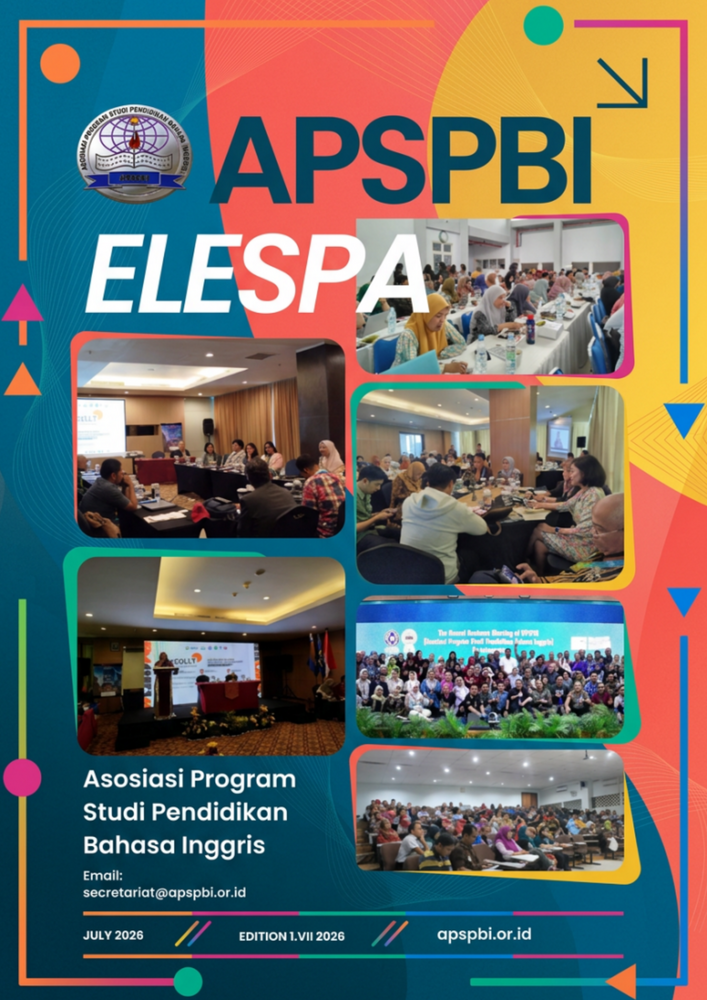
Making English for Tourism Real for Students
Keywords:
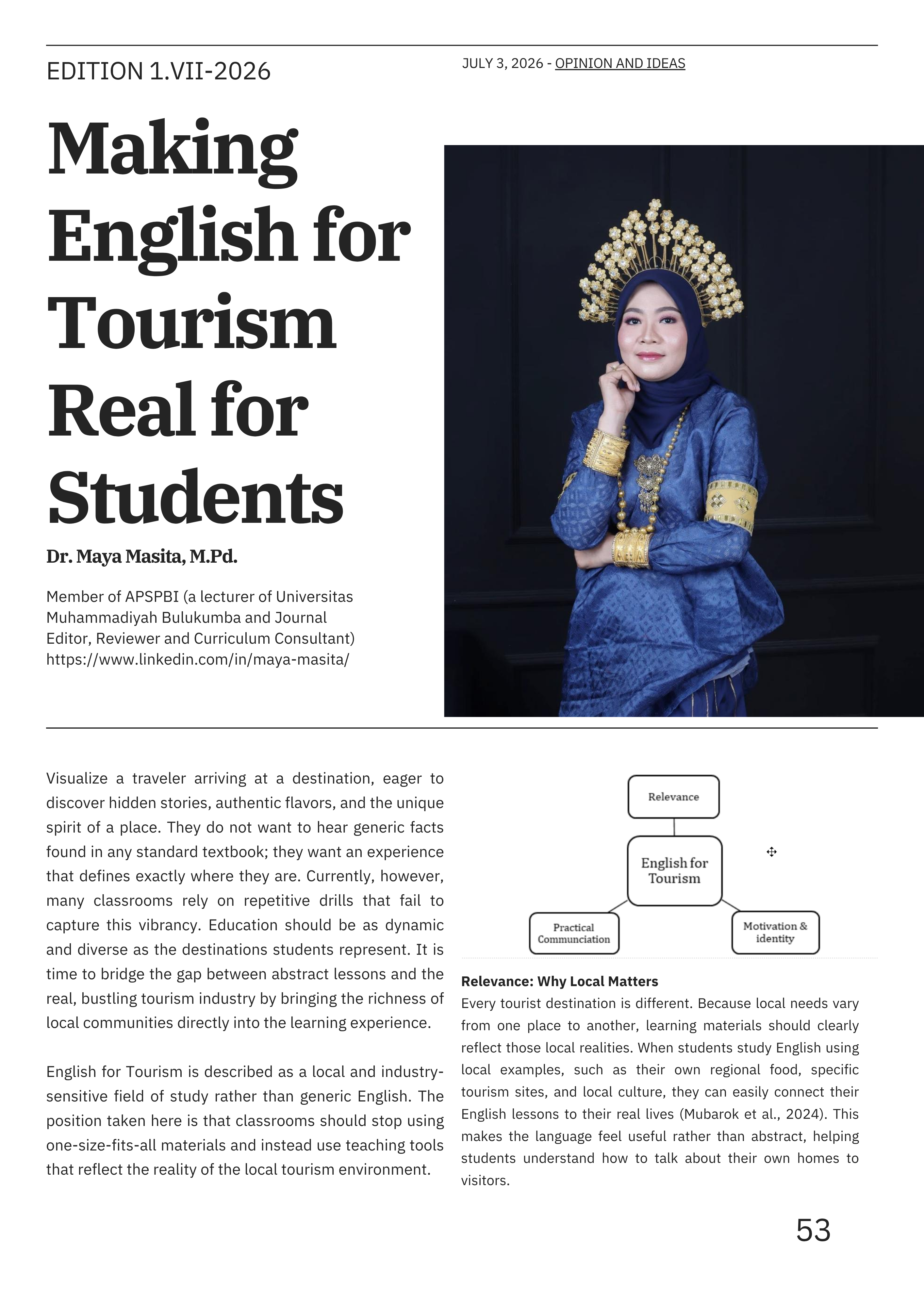
English for Tourism, local knowledge, Maya Masita, Motivation and Identity, Practical Communication, tourism industry, Universitas Muhammadiyah BulukumbaAbstract
Visualize a traveler arriving at a destination, eager to discover hidden stories, authentic flavors, and the unique spirit of a place. They do not want to hear generic facts found in any standard textbook; they want an experience that defines exactly where they are. Currently, however, many classrooms rely on repetitive drills that fail to capture this vibrancy. Education should be as dynamic and diverse as the destinations students represent. It is time to bridge the gap between abstract lessons and the real, bustling tourism industry by bringing the richness of local communities directly into the learning experience.
References
Boonsuk, Y., Samae, R., Ka‐J, W., Wasoh, F. E., & Assalihee, M. (2026). When Marginalized Secondary Students See Themselves in Their ELT Textbooks: Cultural Engagement, Learning Motivation, Identity Formation, and Intercultural Awareness in Culturally Responsive Classrooms Amid an Ongoing Insurgency in Southern Thailand. International Journal of Applied Linguistics. https://doi.org/10.1111/ijal.70074
Mubarok, H., Anif, S., & Prayitno, H. J. (2024). Local Content Through Integrated Collaborative Learning: A Survey of Teaching Materials Needs. Journal of Educational and Social Research, 14(4), 271. https://doi.org/10.36941/jesr-2024-0102
Trang, T.T.T., Phuong, V.T. (2023). Needs Analysis About Intercultural Communicative Competence Among Undergraduate Tourism Students. J Psycholinguist Res 52, 2599–2620. https://doi.org/10.1007/s10936-023-10012-1
Downloads
Published
Issue
Section
License
Copyright (c) 2026 Dr. Maya Masita, M.Pd. (Author)

This work is licensed under a Creative Commons Attribution-NonCommercial-ShareAlike 4.0 International License.