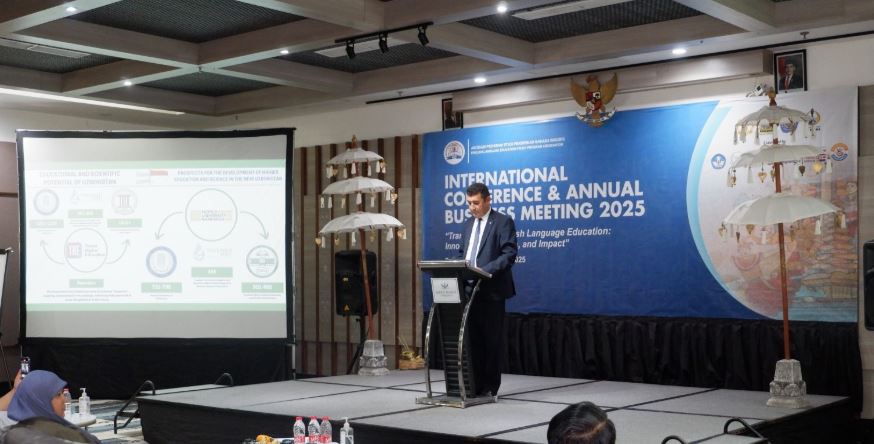
INTRINSIC MOTIVATION IN THE CLASSROOM: FOSTERING ENGAGEMENT AND LIFELONG LEARNING
DOI:
https://doi.org/10.56983/nx0ry888Keywords:
intrinsic motivation, engagement, lifelong learning, self-determination theory, classroom pedagogyAbstract
Intrinsic motivation has been widely recognised as a central driver of student engagement and long-term academic success. This paper explores how intrinsic motivation can be fostered in the classroom to create meaningful learning experiences and to promote lifelong learning habits. Drawing on self-determination theory and contemporary research in educational psychology, the study highlights the importance of autonomy, competence, and relatedness in sustaining students’ natural curiosity and desire to learn. The discussion synthesises evidence from both theoretical and empirical perspectives, emphasising that classrooms which prioritise student choice, constructive feedback, and supportive teacher-student relationships are more likely to cultivate intrinsic motivation. Methodologically, the paper integrates findings from recent case studies, survey data, and classroom interventions that demonstrate effective strategies for enhancing engagement. Key results show that when intrinsic motivation is nurtured, students not only demonstrate improved academic performance but also develop resilience, creativity, and a sustained commitment to personal growth. The conclusions underline the urgent need for educators to move beyond extrinsic rewards and compliance-based approaches, advocating instead for learning environments that inspire self-driven inquiry and active participation. These findings have significant implications for pedagogical practice, teacher training, and curriculum design, ultimately reinforcing the role of intrinsic motivation as a cornerstone of effective education.
References
Deci, E. L., & Ryan, R. M. (1985). Intrinsic motivation and self-determination in human behaviour. Springer.
Ryan, R. M., & Deci, E. L. (2000). Self-determination theory and the facilitation of intrinsic motivation, social development, and well-being. American Psychologist, 55(1), 68–78.
Schunk, D. H., Pintrich, P. R., & Meece, J. L. (2014). Motivation in education: Theory, research, and practice (4th ed.). Pearson Higher Ed.
Reeve, J. (2012). A self-determination theory perspective on student engagement. In S. L. Christenson, A. L. Reschly, & C. Wylie (Eds.), Handbook of research on student engagement (pp. 149–172). Springer.
Wentzel, K. R., & Brophy, J. (2014). Motivating students to learn (4th ed.). Routledge.
Hidi, S., & Harackiewicz, J. M. (2000). Motivating the academically unmotivated: A critical issue for the 21st century. Review of Educational Research, 70(2), 151–179.
Niemiec, C. P., & Ryan, R. M. (2009). Autonomy, competence, and relatedness in the classroom: Applying self-determination theory to educational practice. Theory and Research in Education, 7(2), 133–144.
Downloads
Published
Issue
Section
License
Copyright (c) 2025 The Proceedings of International Conference and Annual Business Meeting

This work is licensed under a Creative Commons Attribution-NonCommercial-ShareAlike 4.0 International License.